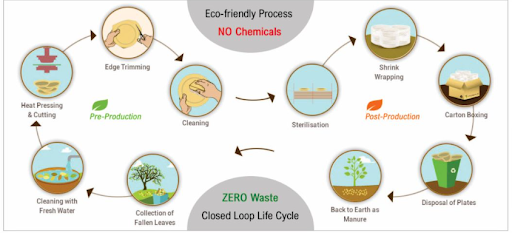
Areca life cycle
1. Natural Growth and Shedding
- Growth: The Areca palm tree grows for several years, bearing fruit (areca nuts).
- Shedding: As the tree matures, it continuously sheds its large, tough leaves (leaf sheaths) naturally.
- Collection: Local farmers collect these fallen sheaths from the ground, which requires no cutting or harming of the trees.
2. Processing and Production
- Cleaning: The collected sheaths are thoroughly washed, cleaned of dirt, and sometimes soaked to increase flexibility.
- Drying: The sheaths are dried, typically in the sun, to remove moisture and prevent mold.
- Heat-Pressing: The cleaned, dried sheaths are placed into hot hydraulic presses, which mold them into shapes like plates, bowls, and trays.
- Sterilization: The heat-pressing process naturally sterilizes the material, eliminating the need for chemicals or toxins.
3. Usage and Distribution
- Durable Application: The final product is lightweight, durable, heat-resistant, and suitable for both hot and cold foods.
- Storage: The plates have a shelf life of approximately 12–18 months if stored in a cool, dry place.
- Usage: They are used as eco-friendly, single-use alternatives to plastic or paper tableware.
4. End-of-Life: Disposal and Composting
- Biodegradation: After use, the products are 100% biodegradable and compostable.
- Return to Nature: When discarded, they decompose naturally within 6 to 8 weeks (or up to 180 days, depending on conditions), turning into organic compost and enriching the soil.
This cycle is considered "cradle-to-cradle" because the waste of the palm tree becomes a product that returns to the earth as nutrients.